Big Monkey
- Author: A Turtle Is Not a Turtle
- Genres: Xianxia, Xuyên Không
- Status: Completed
- Chapters: 838
- Rating: ★ 4.5 / 5
- Published: 2026-09-20

First Impressions
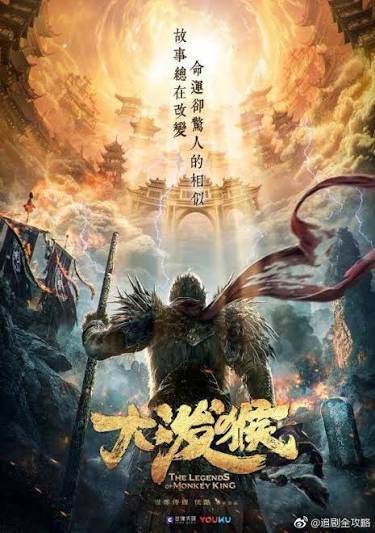
If you are familiar with Journey to the West, you will realize that Big Monkey does not intend to retell the classic tale in a safe way. The protagonist transmigrates into Sun Wukong when he is still a stone monkey, knowing his general future but refusing to meekly follow the pre-written path.
The most gripping aspect of the opening act is the sense that Sun Wukong always knows he is walking into a massive trap. He understands that the events of Journey to the West will happen, but knowing the future does not mean having the power to change it, which creates a survival pressure quite different from typical transmigration protagonists.
Plot and Pacing
The narrative begins at Flower-Fruit Mountain before moving to the quest for Tao, then gradually expands to Lingtai Fangcun Mountain, the Heavenly Court, and other major factions of the Journey to the West world. The author is in no rush to make the protagonist invincible, instead forcing him to constantly hit his limits, fall into schemes, and struggle to survive.
I particularly enjoy how the novel turns familiar details into a brand-new chessboard. However, this is also a point of contention: many readers find the first half much more captivating, while the latter half occasionally feels bogged down by character drama, slowing the pacing. I tend to agree with this assessment, though the latter half still delivers some memorable climaxes.
The Protagonist
The Sun Wukong here is not the carefree, laughing victor from our childhood memories. He is stubborn, vigilant, and weighed down by obsessions—possessing the wisdom of someone who knows the future, yet repeatedly held back by his own temperament and emotions.
- Feng Ling is the character associated with the softest emotional aspects of the story.
- Yang Chan brings a strong, independent presence and plays a crucial role in Sun Wukong's relationships.
- Subhuti is an unpredictable master, making the quest for Tao far from straightforward.
- Six-Eared Macaque serves as a compelling foil to Sun Wukong.
World and Cultivation
One of the aspects I highly appreciate is how the author explains two distinct paths of cultivation. The Pilgrim Path focuses on combat, unlocking physical potential, and transformations, while the Enlightened Path emphasizes scholarship, alchemy, Qi refining, and deduction.
This division is not just for setting up a cultivation chart. It directly influences how characters think and solve problems, ensuring that confrontations are not always decided by who has the higher cultivation base. The depiction of the Heavenly Court, the demon race, and various cultivation factions is also significantly expanded compared to our familiar perception of Journey to the West.
Writing Style and Emotion
What lingers with me long after reading is not necessarily the battles, but the profound sense of powerlessness against fate. The characters may grow incredibly strong, yet they still face dilemmas that raw power alone cannot resolve.
The novel features many touching moments, particularly when family, friendship, and personal romance clash with a grander purpose. In return, this heavy-handed emotional manipulation can tire some readers, especially as relationships drag on and constantly present the protagonist with agonizing choices.
Strengths
- A reimagining of Journey to the West that is darker and full of conspiracies.
- Sun Wukong is a well-defined character, far from the typical protagonist who wins everything effortlessly.
- The Pilgrim Path and Enlightened Path bring a unique twist to the cultivation system.
- Many supporting characters have their own goals and stances, rather than existing solely to prop up the protagonist.
Weaknesses
- The latter half is occasionally bogged down by character drama and slower paced compared to the beginning.
- Certain conflicts and repetitive emotional cycles may try the reader's patience.
- While romantic subplots play a significant role, the handling of Sun Wukong's romantic dynamic can sometimes feel indecisive.
- Not suitable if you only want a simple Journey to the West fanfiction with non-stop action and minimal tragedy.
Conclusion
Big Monkey is well worth a read if you want a version of Journey to the West that completely diverges from the original, emphasizing fate, schemes, and the inner struggles of its characters over pure wish-fulfillment.
Summary: This is a xianxia novel with a highly gripping first half and elaborate world-building, though the latter half has some controversial segments. I rate it 4.5/5.
Tags: journey to the west, cultivation, transmigration