Taoist Priests in the World of Strange Things
- Author: Thai Sword
- Genres: Xianxia, Dị Giới, Linh Dị
- Status: Completed
- Chapters: 640
- Rating: ★ 4.5 / 5
- Published: 2026-09-22
First Impressions
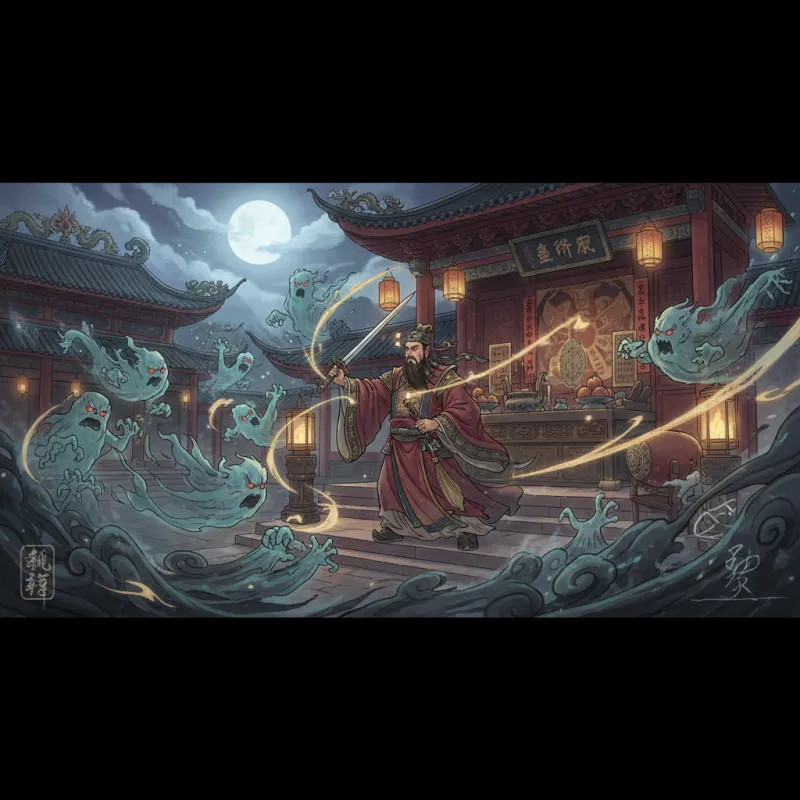
If you are used to the typical xianxia where characters sit cross-legged, absorbing spiritual energy and then splitting the sky with a single sword strike a few hundred chapters later, this novel might give you pause. The world of the story is one where the rituals and etiquette have collapsed, and ghosts, demons, and bizarre taoist arts appear everywhere.
Lu Qian transmigrates into this world with the Golden Mirror, a treasure that helps increase his proficiency when practicing spells. But the great thing is that he doesn't follow the orthodox path; instead, he starts with rather "sinister" practices like the Yin Soul Paper Folding Technique, paper figures, talismans, and techniques related to the Yellow Springs.
Plot and Pacing
The early parts feel more like an exploration into a world of weird tales rather than a pure level-up race. Starting as a minor Daoist Acolyte, Lu Qian must learn to observe his surroundings, accumulate spells, and find a way to survive among things that would terrify an ordinary person just to look at.
As the story progresses, the scale expands significantly, moving from minor supernatural occurrences and localized taoist arts to conflicts between major factions, the Yellow Springs, the underworld, and larger secrets of the world. The pacing is generally steady, but the explanations of taoist laws and lore settings might feel like a bottleneck for fast-paced readers.
Characters
Lu Qian is a protagonist who fits this world quite well: calm, pragmatic, and with no desire to prove he is an absolute good guy. He can employ rather cold-blooded methods when necessary, but he is not the type of character who just slashes everyone he meets.
The interesting part lies in how Lu Qian's personality fits the world perfectly. When the boundary between good and evil is already blurred, a morally gray character feels much more natural than a "I am the righteous path, everyone else is a villain" archetype. Supporting characters also help make the world feel larger rather than just existing to watch the protagonist level up.
World-building and Taoist Arts
This is my favorite part. The novel doesn't just rename a few cultivation realms and call it a new system; instead, it draws material from weird fiction and folk taoist arts to build its world. Things like talisman contracts, paper figures, paper horses, qi cultivation, and mysterious rituals all become real tools in the struggle for survival.
In particular, the world does not feel entirely safe even when the character grows stronger. Ghosts, demons, evil cultivators, and mysterious factions leave readers with the constant feeling that a larger rule might be hidden behind a minor incident. For those who love delving into the lore and theorycrafting how the world works, this is quite a fertile ground.
Style and Atmosphere
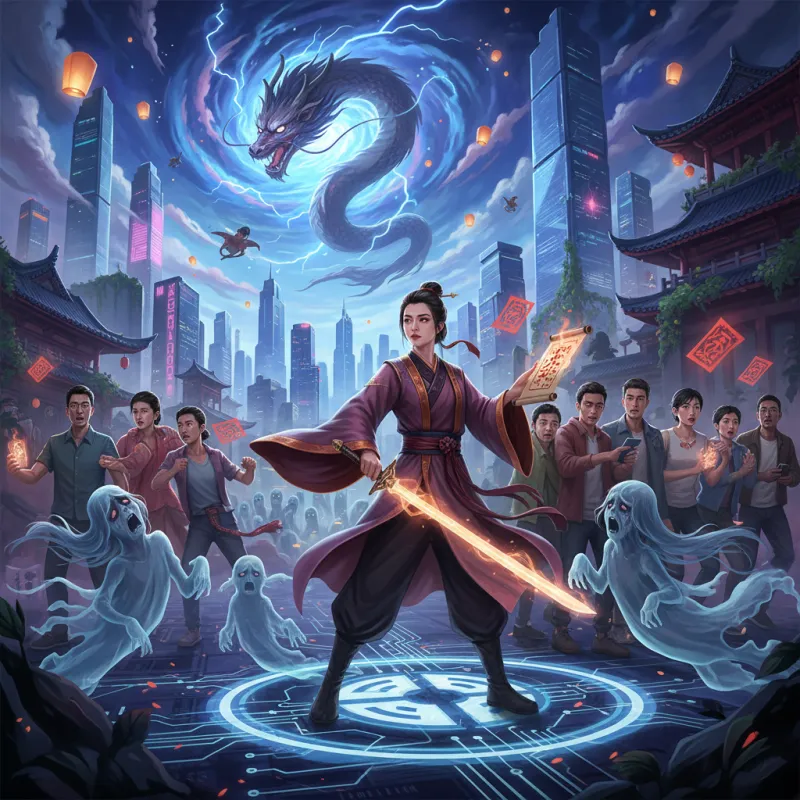
The atmosphere of the novel leans toward dark, mysterious, and slightly chilly, but it isn't always heavy. The segments where Lu Qian searches for resources, researches spells, or handles a specific problem often feel quite "grounded": being a taoist priest also means calculating escape routes, resources, and benefits, rather than just shouting slogans and rushing in.
However, this is also a point that can divide readers. Those who love the atmosphere of weird tales and taoist arts will easily be drawn into these details, while those who just want a continuous stream of action and fights might find the lore settings a bit excessive.
Pros
- A unique weird fiction world, combining xianxia with taoist arts and mysticism.
- Lu Qian behaves pragmatically, knowing how to calculate his moves instead of relying solely on brute force.
- The magic system has many unique details, such as the Yin Soul Paper Folding Technique and the Yellow Springs.
- The world scale expands well, from minor supernatural events to conflicts between major factions.
- Suitable for readers who enjoy long stories and want plenty of things to explore.
Cons
- The abundance of terms and spells can easily overwhelm newcomers, especially when binge-reading.
- Some sections explaining lore settings or taoist magic slow down the pacing.
- This is not the type of story where the protagonist always aligns with the righteous path, so Lu Qian's actions may displease some readers.
- As the world scale grows larger, the amount of information to remember increases accordingly.
Conclusion
If you enjoy xianxia but want a change of pace to a world full of weird occurrences, taoist arts, and unorthodox cultivation paths, this is a novel well worth trying. I particularly like how Lu Qian does not just grow stronger but also has to learn how to survive in a world where too many things cannot be viewed through normal logic.
In short: A xianxia novel with a very distinct flavor of weird fiction, strong in world-building and taoist arts, but requires patience with the relatively dense amount of terminology and lore setup.
Tags: weird fiction, taoist arts, otherworld