Purple Sun
- Author: Feng Yu Jiu Qiu
- Genres: Xianxia, Historical
- Status: Completed
- Chapters: 580
- Rating: ★ 4.5 / 5
- Published: 2026-09-21
First Impressions
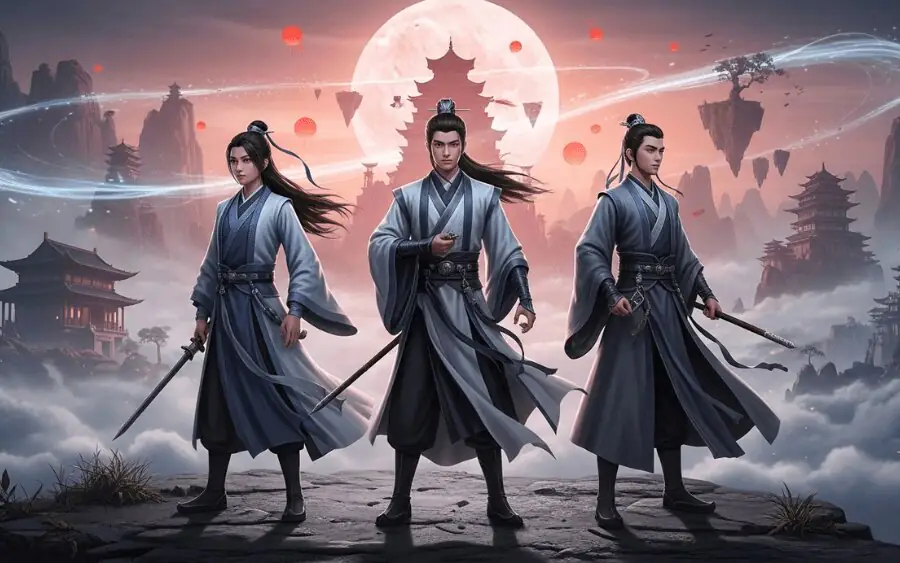
Judging purely by its title, I initially thought Purple Sun would be a fairly standard xianxia novel: the main character encounters a miraculous opportunity, goes up the mountain to learn Daoist arts, and starts grinding monsters. But the opening doesn't cater to reader expectations like that. Just as Mo Wen is preparing to get married, the chaos of war strikes—his family is shattered, his wife is abducted, and he himself is forced to wander alongside Lao Wu just to survive.
What surprised me was that the story places human experience before cultivation. Mo Wen is not the type of protagonist who possesses main-character aura right from the start; instead, he has to endure hunger, cold, war, and loss before gradually stepping onto the path of cultivation.
Plot and World-Building
The setting is inspired by the Sixteen Kingdoms period (Five Barbarians period), where war and political upheaval made life extremely harsh for common folk. Amidst these circumstances, Mo Wen, a young man from an apothecary family, gradually enters the Shangqing Sect at Wuliang Mountain to learn the Dao.
What I appreciate is that the xianxia elements here are not detached from real life. Mo Wen learns Daoist arts, medicine, alchemy, talisman arts, and martial arts, only to return to face war and mundane worldly affairs. As a result, the story feels like practicing the Dao to solve real-world problems, rather than merely climbing cultivation realms.
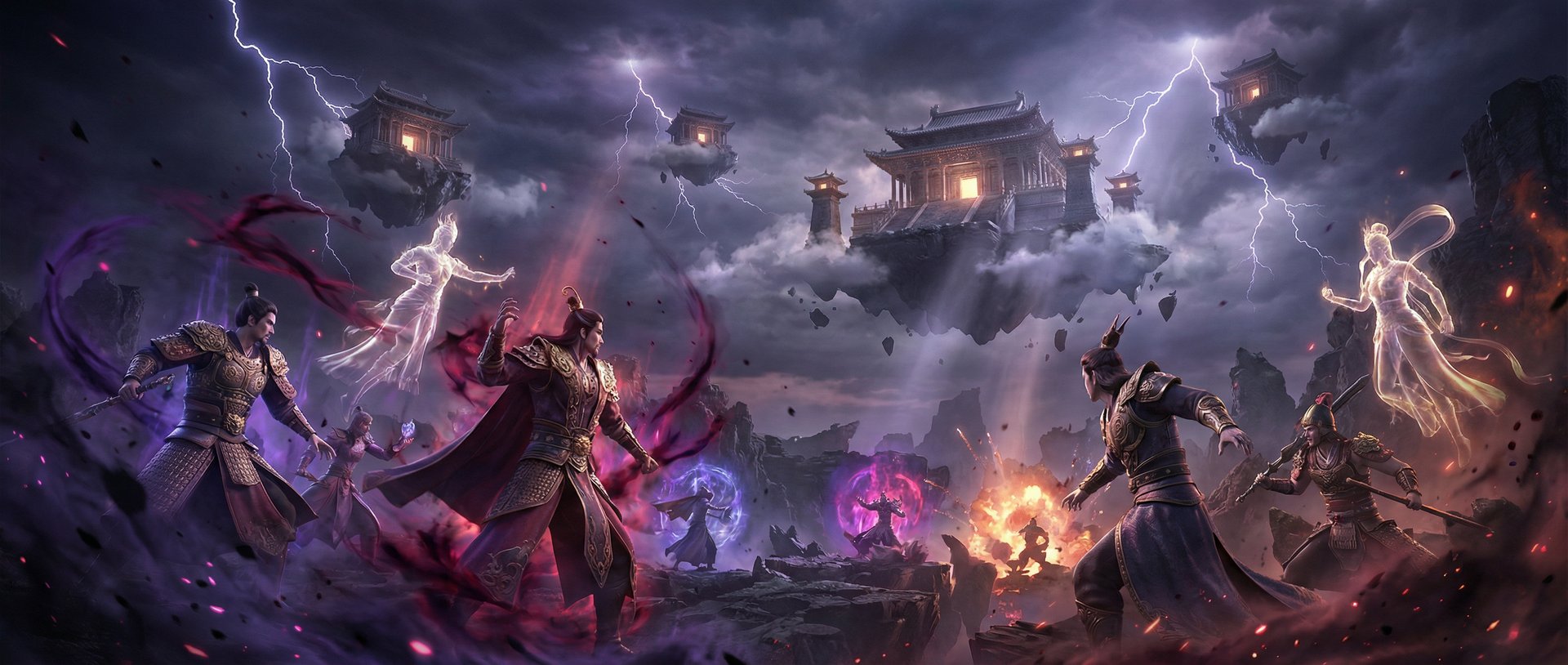
As the story progresses, the world expands to include demons, immortals, the dragon clan, and the heavenly realm. The power system also starts at Qi Refinement, then develops into Nascent Soul, Earth Immortal, Heavenly Immortal, and higher realms. This depth of world-building is quite fascinating, though it's also where I had to start keeping track of a lot of names.
Characters and Cultivation
Mo Wen is the kind of protagonist I really like: quiet, cautious, and prone to thinking before acting. Coming from an educated family that ran a medicine business and valued propriety, his transformation into a Daoist priest isn't a sudden, overnight shift in personality.
- Parents: Mo Wen loses his parents in the chaos of war early on.
- Friends: Lao Wu was originally a household servant who grew up with Mo Wen, making their relationship closer to deep friendship than master and servant.
- Love interest: A Jiu is a key romantic figure for Mo Wen, who also possesses her own unique identity and capabilities.
- Sect members: Shangqing Sect provides Mo Wen with an environment to study the Dao and companions who significantly influence his growth.
The cultivation realms don't follow the trend of popping up a new stat panel with every breakthrough. spiritual energy is divided into color-coded tiers, while the later cultivation path involves internal alchemy, ascension, and higher realms of existence. The overall feel is that the author wanted to build a grounded system of Daoist arts rather than just renaming familiar realms.
Writing Style and Tone
What kept me reading wasn't necessarily the battles, but how the story lets characters live in grounded, realistic conditions. At times, Mo Wen has to worry about food, travel routes, medicine, or shelter long before thinking about becoming an immortal. It sounds almost funny, but these mundane details make the protagonist feel far more human.
In addition, the story is heavily infused with Daoist philosophy, Confucian thought, and concepts of righteousness. The Dao is not merely strength, but is intimately connected to how the character perceives people, life, and their choices in times of chaos. This aspect sets the novel apart from many works that focus solely on leveling up.
Strengths
- A strong historical backdrop, giving the chaotic era far more weight than a purely fictional period setting.
- The systems of Daoist arts, talisman arts, alchemy pills, and internal alchemy are developed with impressive depth and layers.
- Mo Wen grows step by step, with very few instances of powers conveniently falling from the sky.
- The dynamics between humans, demons, and cultivators yield many intriguing situations, where no faction is purely good or evil.
- Everyday life moments keep the story grounded and relatable even as its scale grows massive later on.
Weaknesses
- Heavy on terminology, especially as the narrative shifts from the mundane realm into the cultivation world and the heavenly realm.
- Certain passages lean heavily into explaining Daoist arts, cultivation realms, or world rules, which may feel slow for readers who prefer fast pacing.
- The blend of historical elements and Daoist cultivation means the pacing isn't always fully consistent.
- The romantic subplot has many ups and downs while the core focus remains on cultivating the Dao and aiding worldly lives, so readers looking for pure romance might find it lacking.
Conclusion
I would classify Purple Sun as a recommended xianxia read if you enjoy stories rich in real-life groundedness, historical weight, and Daoist arts rather than mindlessly grinding realms. It might not be the lightest read, but the longer you stick with it, the more rewarding it becomes to watch an ordinary person traverse war-torn chaos and gradually uncover a much wider world.
In short: Purple Sun is best for fans of classic xianxia featuring deep world-building and characters who mature through hardship; in return, the extensive lore and terminology require a patient read to fully digest.
Tags: daoist arts, chaotic times, cultivation